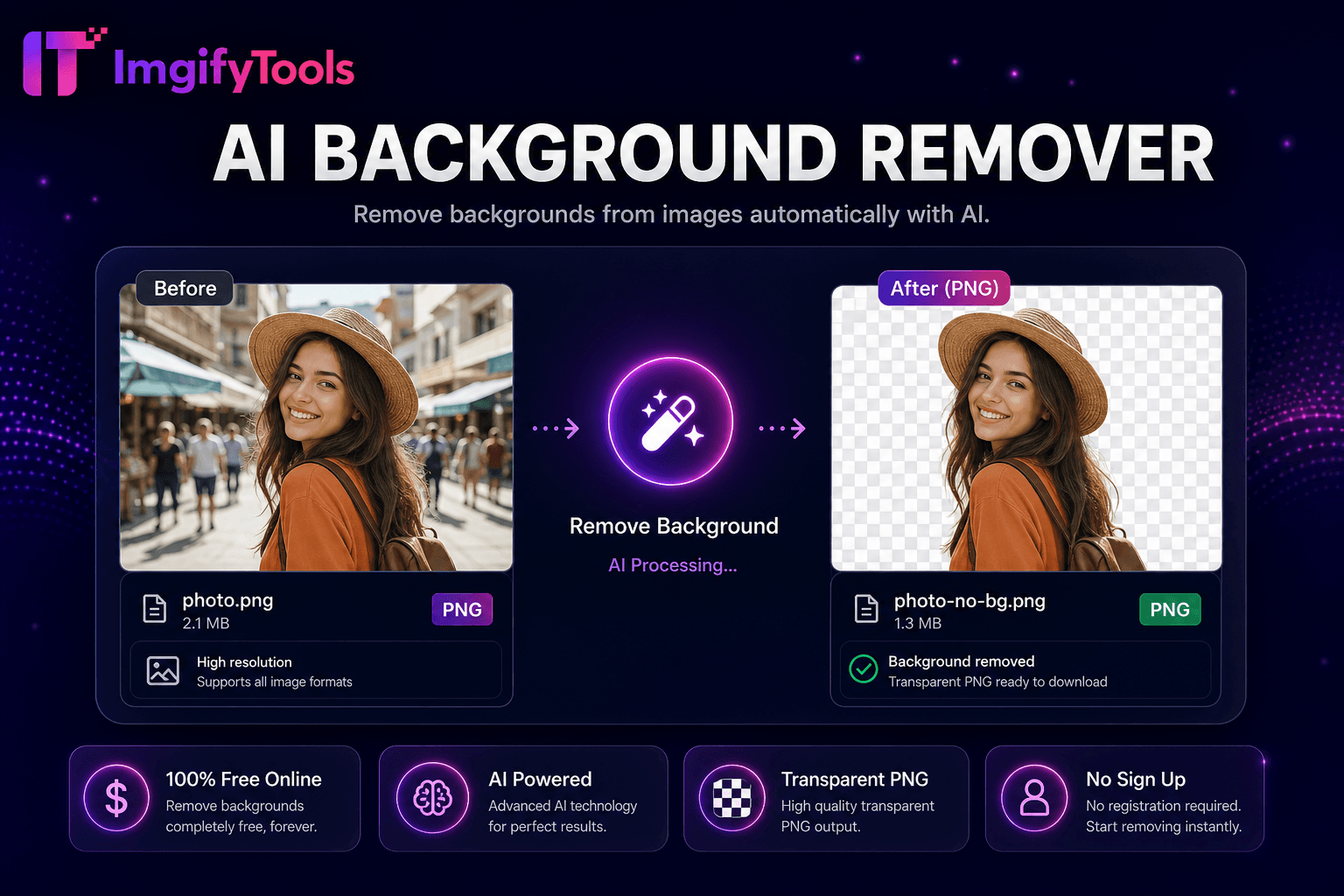
AI Background Remover
Remove backgrounds from images automatically with AI.
Launch ToolChange image DPI for print and document uploads. Free for standard use — no signup required.
ImgifyTools Image DPI Converter changes embedded DPI metadata on photos to 72, 150, 300, or 600 dots per inch—signaling print shops, passport portals, and publishing systems how to interpret pixel dimensions without blindly resizing artwork. Many online forms reject uploads when DPI tags read 72 from web exports even though pixel counts meet requirements. Passport photo kiosks expect 300 or 600 DPI on 2×2 inch layouts. Authors embedding figures in print-on-demand books need 300 DPI metadata on full-size pixels. Our tool rewrites EXIF and JFIF density fields while optionally preserving actual pixel width and height, so a 1200×1200 image tagged 300 DPI reports four inches square to compliant software. Unlike destructive upscaling, metadata-only conversion avoids fake enlargement when pixels already suffice. Upload JPG or PNG, select target DPI, preview reported print dimensions, download a file print workflows recognize. Free companion to passport photo makers and image resizer when submission checklists mention DPI explicitly. Uploads are processed on ImgifyTools servers for your session (max 10 MB), are not retained permanently, and are not used to train AI models.
Upload JPG or PNG image needing DPI correction.
Select target DPI: 72, 150, 300, or 600.
Review computed print dimensions in the preview panel.
Confirm pixel dimensions still meet your portal requirements.
Download the DPI-tagged file for print or form upload.
Unlike many other platforms that compromise on quality or hide results behind paywalls, ImgifyTools offers high-fidelity output with a focus on speed and user privacy. No account creation is required to start transforming your images.
Digital images store optional resolution tags separate from pixel arrays. The converter reads current width, height, and existing DPI if present, then writes new density values into EXIF and JFIF headers without interpolating pixels unless you choose a combined resize mode. Print dimension calculators derive inches or millimeters as pixels divided by DPI—changing metadata alone shifts reported physical size while screen display stays identical. PNG pHYs chunks update for PNG outputs. Validation preview shows computed print width and height so you confirm passport and visa specs before download. Server processing handles high-megapixel sources. Output remains standard JPG or PNG compatible with Walgreens upload portals, InDesign placement, and government e-forms that parse header metadata.
Set 300 DPI on passport photo exports after cropping to 600×600 pixels so kiosk software reports correct 2×2 inches. Fix DSLR exports tagged 72 DPI before sending publisher-ready figures—pixels may already suffice at 3000 px wide. Do not confuse DPI metadata change with AI upscaling; if pixels are too few for intended print size, use image upscaler first then set DPI. Visa portals sometimes specify both pixel dimensions and DPI— satisfy both with crop plus converter. Screenshot assets at 72 DPI are fine for web; convert only when print or form software complains. Keep unmodified originals archived when legal filings require authenticity trails.
See how our free image dpi converter compares to iloveimg on price, limits, and features.
| Feature | ImgifyTools | iloveimg |
|---|---|---|
| Price | Free DPI converter | Free with ads; premium features |
| DPI presets | 72, 150, 300, 600 | Common DPI options |
| Metadata only | Preserves pixels when appropriate | May resize with DPI change |
| Print preview | Computed dimensions shown | Basic output info |
| Formats | JPG and PNG | JPG, PNG, and more |
| Privacy | Session processing | Cloud upload policy |
| Tool suite | Passport and resizer integrated | Separate converter page |
More tools
Other specialized utilities for your workflow.